


Yes, your hair and scalp need targeted sun protection. Wear a wide-brim hat, and apply a scalp sunscreen or UV-protectant hair mist before you head outside. UV rays fade color, weaken the protein structure inside each strand, and can burn an exposed scalp, especially along the parting. Reapply after swimming or heavy sweating, and try to limit peak midday exposure whenever you can.
TL;DR:
- Applying a scalp-specific UV protectant or hat is essential, especially for thinning or chemically treated hair, as the scalp receives the same UV dose as the face.
- UV rays cause color fading, weaken hair structure, and increase fragility, with UVB causing surface damage and UVA penetrating deeper to break down melanin.
- Hair protection products should clearly list active UV filters and antioxidants, as the “hair SPF” label is unregulated and often misleading.
- Use mist or spray formats for frequent reapplication and consider scalp sticks or powders for targeted protection of parts and hairlines.
- Combining physical barriers like UPF clothing and hats with targeted topical products maximizes protection and minimizes reliance on reapplication.
Table of Contents
- How Sun and UV Rays Harm Hair and Scalp
- How Hair Sun-Protection Products Actually Work
- Choosing a Format: Sprays, Leave-Ins, Sticks, and Powders
- When and How to Apply for Real Protection
- Routines by Lifestyle: Commute, Beach, and Beyond
- Meet the Voice Behind This Guide
- Product Examples Worth Adding to Your Kit
- Natural and DIY Ways to Shield Your Hair
- Repairing Hair That’s Already Sun-Damaged
- Physical Barriers First, Products as Backup
- Build Your Sun-Ready Kit With Hello Salt and Linen
- Sources
- FAQ
How Sun and UV Rays Harm Hair and Scalp
UVA and UVB rays don’t damage hair the same way they damage skin, but the effects compound fast. UVA penetrates deeper and breaks down the melanin pigment inside the hair shaft, which is why color fades and lightens with repeated sun exposure. UVB works more on the surface, weakening the protein bonds in the cuticle and cortex until strands turn brittle and prone to snapping.
Combine that UV load with heat styling, chlorine, or salt water, and the damage stacks. Research on UV effects and hair biology shows that UV exposure alone increases fragility and accelerates fade, but pairing it with mechanical stress, like brushing wet hair or blow-drying right after a swim, makes the outcome noticeably worse.
The scalp tells its own story. It’s skin, after all, and it burns the same way your shoulders do. Signs of sun-related hair and scalp damage usually show up as:
- Color that looks duller or noticeably lighter than it did a month ago
- Straw-like texture and split ends that weren’t there before summer
- Increased breakage when you comb or style
- A tender, pink, or peeling scalp, especially along the part
- Flaking or itching in areas that get consistent sun exposure
People with light, previously colored, or chemically treated hair are more vulnerable because their cuticle is already compromised. Anyone with thinning hair, a wide part, or a bald spot carries extra risk too. That patch of exposed scalp gets the same UV dose as your face, minus the sunscreen most people remember to apply there.
How Hair Sun-Protection Products Actually Work
Most hair sun-protection formulas rely on three mechanisms working together, not one single ingredient doing all the work. Cleveland Clinic’s guide to sun-related hair damage breaks it down clearly: UV filters absorb or reflect radiation before it reaches the hair shaft, film-forming polymers coat each strand to slow moisture loss, and conditioning agents smooth the cuticle so hair resists tangling and looks less dull after sun exposure.
Lab data worth knowing: UV-filtering ingredients like PARSOL® SLX have shown up to 32% better color retention in red permanent hair during controlled color-fading studies. That’s a measurable difference between a product that just smells good and one that actually slows pigment breakdown.
Here’s where it gets tricky for shoppers: the phrase “hair SPF” isn’t regulated the way SPF is on skin sunscreen. Emerging research on measuring hair UV protection points out that standardized testing for hair products is still being developed, so a number printed on a bottle doesn’t always mean what you think it means. Until that standard catches up, judge a product by what it lists, not by what it claims. Prioritize labels that name:
- Specific UV filters (not just “sun protection” as a vague phrase)
- Antioxidants like vitamin E or green tea extract, which help offset oxidative damage
- Film-forming polymers or silicones that create a physical barrier on the strand
- Broad-spectrum language, since UVA and UVB damage hair differently
A product that names its actives is one you can actually evaluate. A product that just says “protects from sun” on the front label is asking you to trust it blind.
Choosing a Format: Sprays, Leave-Ins, Sticks, and Powders
The right hair sun-protection product depends less on brand and more on how you’ll actually use it. A stick that sits in a drawer because it feels greasy isn’t protecting anything.
- Mists and sprays cover the canopy of your hair quickly and work well for reapplication throughout the day. They’re the easiest format to carry in a beach bag, though they can leave hair feeling slightly stiff if you overdo it.
- Leave-in conditioners with UV filters double as a detangler and a protective layer, making them a solid choice for mid-lengths and ends that see daily sun but don’t need constant reapplication.
- Scalp sticks glide directly onto the part and hairline without the mess of a spray, which makes them ideal for exposed skin at the crown or a receding hairline.
- Powder SPFs work for people who want scalp protection without touching their style, since they can be brushed on dry without adding weight or shine.
- Cream-based protectants tend to suit thicker or coarser textures that need more moisture alongside UV defense, but they can feel heavy on fine hair.
Cosmetic trade-offs matter more than most people admit. A white cast on the scalp is a real problem if you have dark hair and a visible part. Greasiness ruins a mist for anyone with fine or oily hair. Scent matters if you’re layering it under other products. And carryability, whether something fits in a pocket or beach tote, decides whether you’ll actually reapply it or just leave it in the car.
Some products on the market, like Sun Bum’s Scalp and Hair Mist SPF 30, list specific active chemical filters and clear reapplication instructions on the label, which is exactly the kind of transparency worth looking for regardless of which brand you choose.
Pro Tip: Keep your shopping list simple: broad-spectrum protection, at least one named antioxidant, and a film-forming ingredient. If a label can’t tell you those three things, it’s probably relying on fragrance and marketing instead of chemistry.
When and How to Apply for Real Protection
Order matters here almost as much as the product itself. A routine that treats scalp, canopy, and ends separately holds up far better than one spray applied haphazardly.
- Start at the scalp. Apply a stick or spray directly along your part and hairline, since this is the area most similar to facial skin and the most commonly forgotten.
- Cover the canopy. Mist the length of your hair and finger-comb or brush through so the product distributes evenly instead of pooling in one section.
- Finish at the ends. Use a leave-in cream or a drop of protective oil only where needed, particularly if your ends are already dry or color-treated.
- Reapply after triggers. Cleveland Clinic recommends treating hair products like sunscreen: reapply after swimming, heavy sweating, or towel-drying, not just on a fixed clock.
- Match frequency to format. Mists typically need refreshing every couple of hours outdoors, while leave-ins and sticks tend to hold up longer between applications.
Color-treated hair benefits from extra antioxidant support since pigment loss accelerates once the cuticle is compromised. Children’s scalps sunburn faster than adults’, so a hat matters as much as any spray. And if you have a sensitive or flaky scalp, patch-test any new formula along the hairline before applying it broadly, since some UV filters can feel irritating on compromised skin.
Routines by Lifestyle: Commute, Beach, and Beyond
Your protection routine should look different on a Tuesday commute than it does on a Saturday at the shore. Matching effort to activity keeps you consistent instead of overwhelmed.
- Commuter or urban day: A light UV mist in the morning, a hat for any extended walk, and a leave-in applied to mid-lengths covers most of the day without extra thought.
- Beach or pool day: Apply a protectant before you get in the water, rinse and reapply once you’re out, and keep a wide-brim hat or UPF cover-up on hand for breaks between swims.
- Thinning or widely parted scalps: Lead with a scalp stick or powder along the exposed skin, then layer a hat on top for the hours you’re not actively reapplying.
- Color-treated hair: Choose formulas built around antioxidants and named UV filters, since fading and dryness show up faster on chemically processed strands.
None of these routines require a full shelf of products. They just require picking the right tool for the exposure you’re actually facing that day.
Meet the Voice Behind This Guide
Jessica writes about coastal living for Hello Salt and Linen, covering everything from breathable fabrics for beach vacations to styling linen for the shore. Her approach favors practical, purchase-ready advice over guesswork, which shapes how Hello Salt and Linen curates its grooming and apparel selections.
Pack smart, not heavy: a lightweight UPF cover-up folds flat in a beach tote, and a compact scalp stick or travel-size mist fits in the same side pocket as your sunglasses. Grab both on your way out the door, and you’ve covered the two spots sun damage hits hardest.
Product Examples Worth Adding to Your Kit
You don’t need a dozen products to build reliable hair sun protection, just a few that cover the scalp, canopy, and ends without duplicating effort. A dedicated scalp spray or stick with a named UV filter should anchor your kit, since that’s the area most people skip entirely. Pair it with a leave-in conditioner or oil that lists an antioxidant, which helps color-treated or previously damaged hair resist further fading.
For coverage that doesn’t rely on a bottle at all, a wide-brim hat or a UPF-rated cover-up does double duty: it blocks UV rays from ever reaching your hair or scalp, and it requires zero reapplication throughout the day. Hello Salt and Linen’s Accessories collection includes hats and travel pieces built for exactly this kind of coastal use, while the Beauty & Grooming collection rounds out the grooming side of a sun-ready routine. Look for products that state their active ingredients plainly. A spray or stick that lists its UV filter by name is one you can actually trust, unlike a bottle that just promises “sun protection” without backing it up.
Natural and DIY Ways to Shield Your Hair
Not every defense against sun damage comes from a bottle. Physical barriers remain some of the most reliable, low-cost tools available, and they require no reapplication schedule at all.
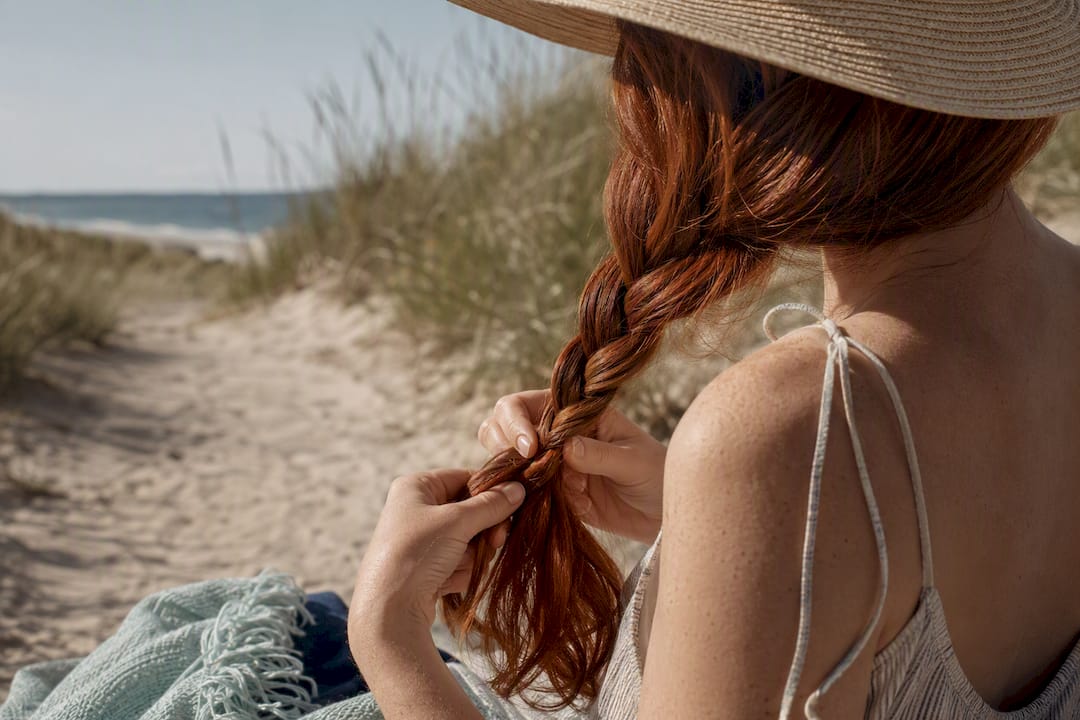
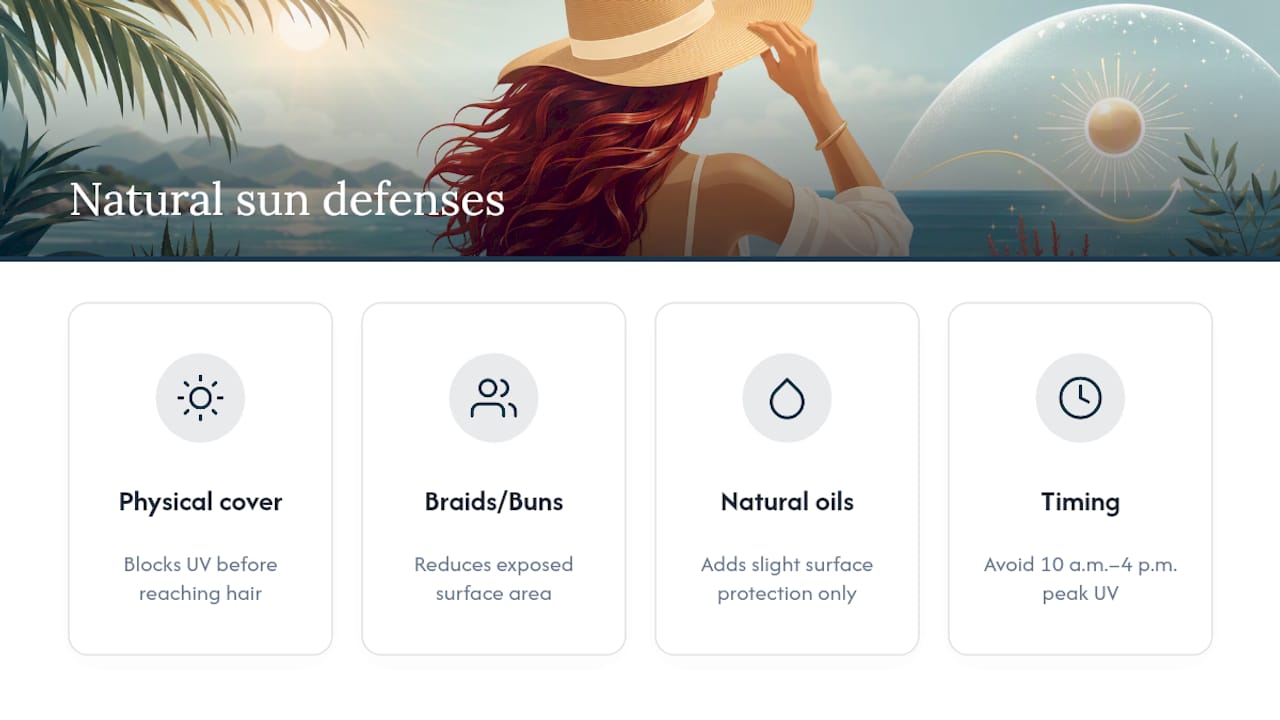
A wide-brim hat, a loosely woven scarf, or a UPF-rated cover-up blocks UV rays before they ever touch your hair, which is a real advantage over any topical product. Braiding or bunning your hair before a long day outside also reduces the surface area exposed to direct sun, limiting cumulative damage on any single section of strand.
Some people reach for coconut oil or other natural oils as a lightweight barrier, and while oils can add a small amount of surface protection and shine, they don’t replace a UV filter chemically designed to absorb or reflect radiation. Think of natural oils as a supplement to shade and cover, not a substitute for them. Timing helps too: UV intensity peaks between roughly 10 a.m. and 4 p.m., so scheduling long outdoor stretches earlier or later in the day cuts your total exposure without changing a single product in your routine.
Repairing Hair That’s Already Sun-Damaged
If the damage is already done, color fade and brittleness don’t reverse overnight, but the right routine slows further breakdown and restores some softness and shine. Start with a deep conditioning treatment once or twice a week, focusing on the mid-lengths and ends where sun exposure accumulates fastest.
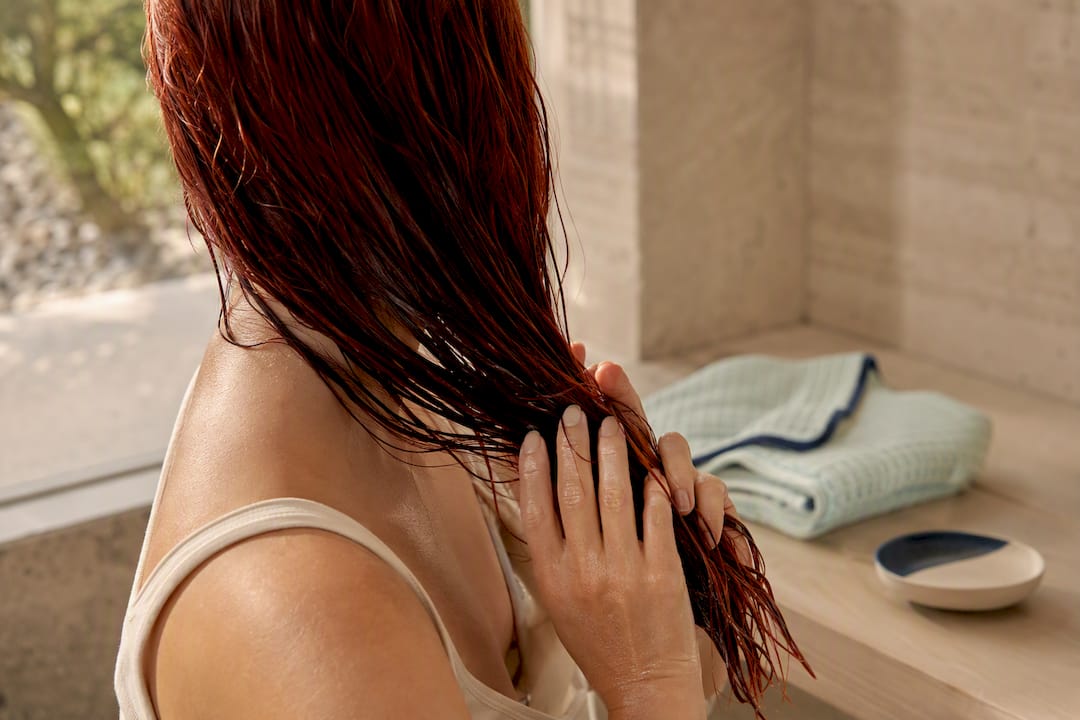
Look for reparative ingredients like hydrolyzed proteins, which temporarily fill gaps in a weakened cuticle, and antioxidants, which help calm the oxidative stress that UV exposure leaves behind. Trimming split ends is not optional here. Once the cuticle splits, no product fully seals it back together, and continuing to style over damaged ends just spreads the breakage further up the strand.
Cutting back on heat styling while hair recovers gives it a real chance to rebuild strength. Pair that with a sun-protectant product going forward, since treating existing damage without preventing new damage just means you’re running in place all season.
Physical Barriers First, Products as Backup
The conventional wisdom on hair sun protection tends to lead with products, sprays, sticks, serums, when it should lead with fabric. A hat blocks UV rays completely and never wears off partway through the day. That single fact makes UPF clothing and wide-brim hats the most dependable layer of defense, with topical products filling in the gaps a hat can’t cover.
Save the higher-priced scalp sticks and antioxidant leave-ins for the areas physical barriers miss: your part, your hairline, and your ends on days when a hat isn’t practical. That’s where the investment pays off. Budget accordingly. One good hat outlasts a season of sprays, while a travel-size scalp stick costs less than most bottles of shampoo and does more targeted work.
— Jessica
Build Your Sun-Ready Kit With Hello Salt and Linen
This coastal shopping destination pairs hair protection routines with apparel designed to block sun exposure, offering hats and grooming items curated for warm-weather days by the shore.

Long sleeves count as sun protection too, especially on hours-long beach days when reapplying spray gets easy to forget. The Men’s Button Front Long Sleeve Shirt and Pants Set and the Men’s Button Down Long Sleeve Shirt and Pants Set offer lightweight, breathable coverage that works as a cover-up between swims or a full day out of the water. If you want a second option in the same style, the Button Down Long Sleeve Shirt and Pants Set rounds out the lineup.
For a simple beach-day pairing, grab one of these sets alongside a compact scalp spray and a leave-in for your ends, then browse the Accessories collection for a hat to finish the look. Shop the full Men’s and Women’s collections to start building your kit today.
Sources
- Laboratory study demonstrating color retention with specific UV filters
- How to protect hair from sun damage: A UV guide — Cleveland Clinic
- Discussion of hair UV protection measurement
FAQ
What Is the Best Sun Protection for Hair?
A wide-brim hat or UPF cover-up paired with a scalp sunscreen or UV-protectant hair mist offers the most reliable combination. Look for products naming specific UV filters and antioxidants, since lab studies show ingredients like PARSOL® SLX can retain up to 32% more color in red permanent hair compared to unprotected strands.
What Can I Put in My Hair to Protect It From Sun?
Leave-in conditioners or mists containing UV filters, film-forming polymers, and antioxidants offer the strongest topical protection. Cleveland Clinic notes these three mechanisms work together to absorb UV rays, reduce moisture loss, and smooth the cuticle.
How Can I Protect My Hair From the Sun?
Combine physical barriers, hats, scarves, or UPF clothing, with a targeted scalp product and a UV-protectant mist for the canopy. Reapply after swimming or heavy sweating, and try to limit direct exposure during peak UV hours in the middle of the day.
Is There Such a Thing as Sunscreen for Hair?
Yes, though it works differently than skin sunscreen and isn’t governed by the same SPF standard. Products like scalp sticks, sprays, and powders exist specifically for this purpose, and some, like Sun Bum’s Scalp and Hair Mist, list active filters and reapplication guidance directly on the label.
Does Hello Salt and Linen Sell Hair Sun-Protection Products?
Hello Salt and Linen’s Beauty & Grooming collection carries grooming essentials suited to sun-ready routines, alongside Accessories like hats that provide physical UV coverage. Current prices and availability are listed directly on the site.

